Image selection
When it came to starting the process of selecting images for Darling I realised I had over 200 from the last two years that I had saved for consideration. With the aim of really focusing the direction and impact of the publication I decided to initially limit my project to 40 pages, and began creating groupings of the images on my computer and on my phone, making multiple draft orders that shaped the project in different ways.
I then decided to by a 40 page A3 scrapbook and began my editing and cutting process digitally, removing any similar photographs as well as anything that did not fit the tone of the project anymore. From there I printed roughly 120 images to begin the process of assembling a physical draft.
Assembling the fist page was very hit and miss; trying to decide what kind of impact I want the first spread or the first image to have is difficult. When researching image assembly, it was clear that the selection process is difficult no matter who the artist or what the project is. Olivia Arthur described her selection process for her book Stranger; “selecting the images for inclusion in the book became extremely complicated because each picture affects how the previous three ones look and the three following” (Arthur, 2013). I Spent weeks deliberating on how the images presented on their individual spreads related to each other, and then how those spreads related to the other spreads throughout the book.
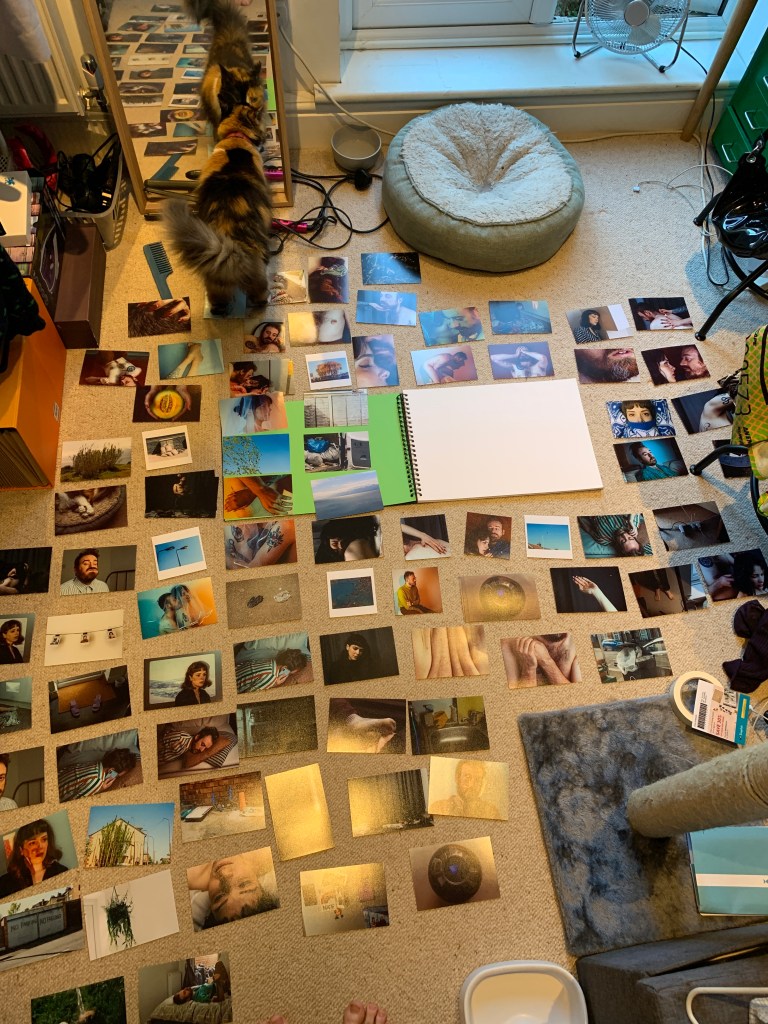
When researching the process of making a book, I came across an interview with Elinor Carucci where she describes the amount of work that goes into the editing process; “we narrowed down the images, printed them small and laid them out on the floor of my apartment, sometimes I would live with them for a few days, and the book editor would come back again and we would move the prints and sequence them again and again. It’s a lot of work” (Carucci, 2009). I think I could spend an incredibly long amount of time editing my work, even when I feel like I have a definitive order I think of ways to change the narrative. I also typically struggle with the mindset of new is better because its fresh. With Darling I found the need to keep stepping away and really considering why I liked one edit more than another.
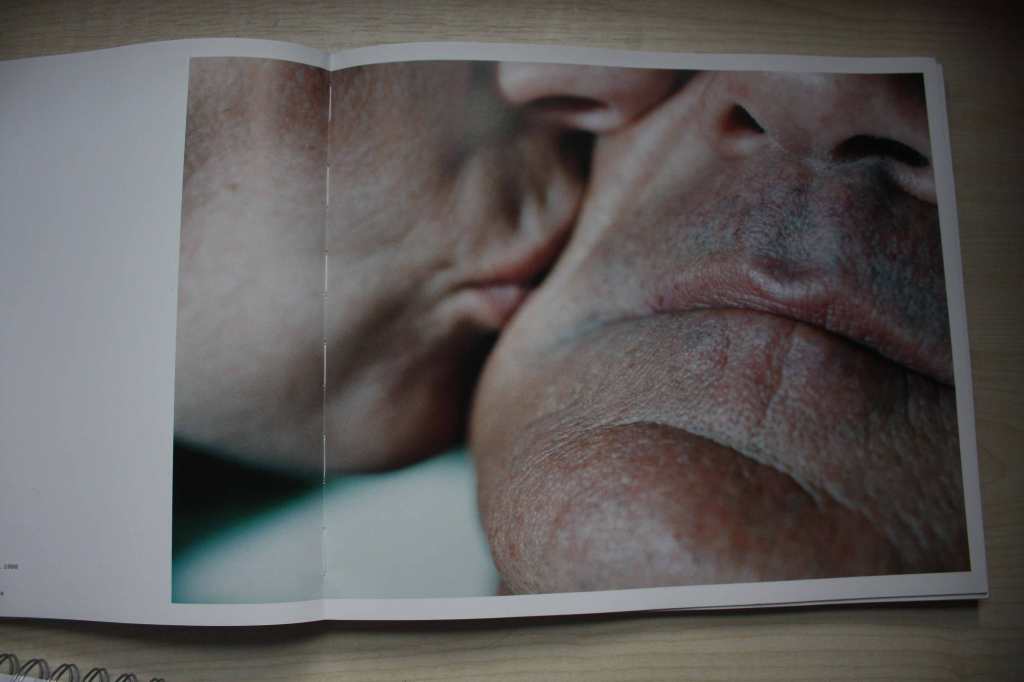
There is a tactile correlation between the images on the spreads, matching traces of color across the page between completely different images helped me to build the connection between the different images on the spreads. I didn’t want anything jarring the viewer when looking at the work, this began unlocking different combinations of images that otherwise would not have worked together.
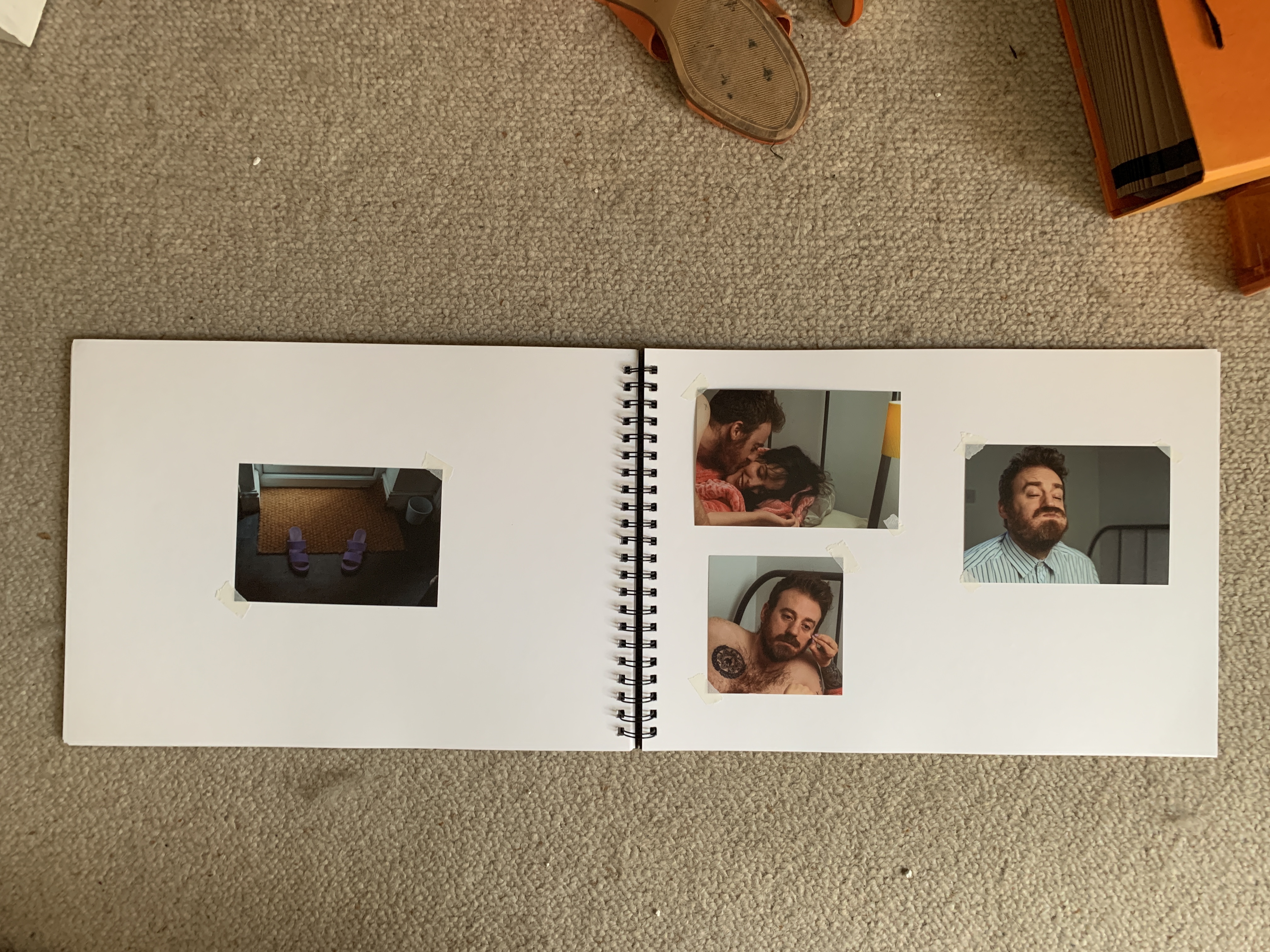
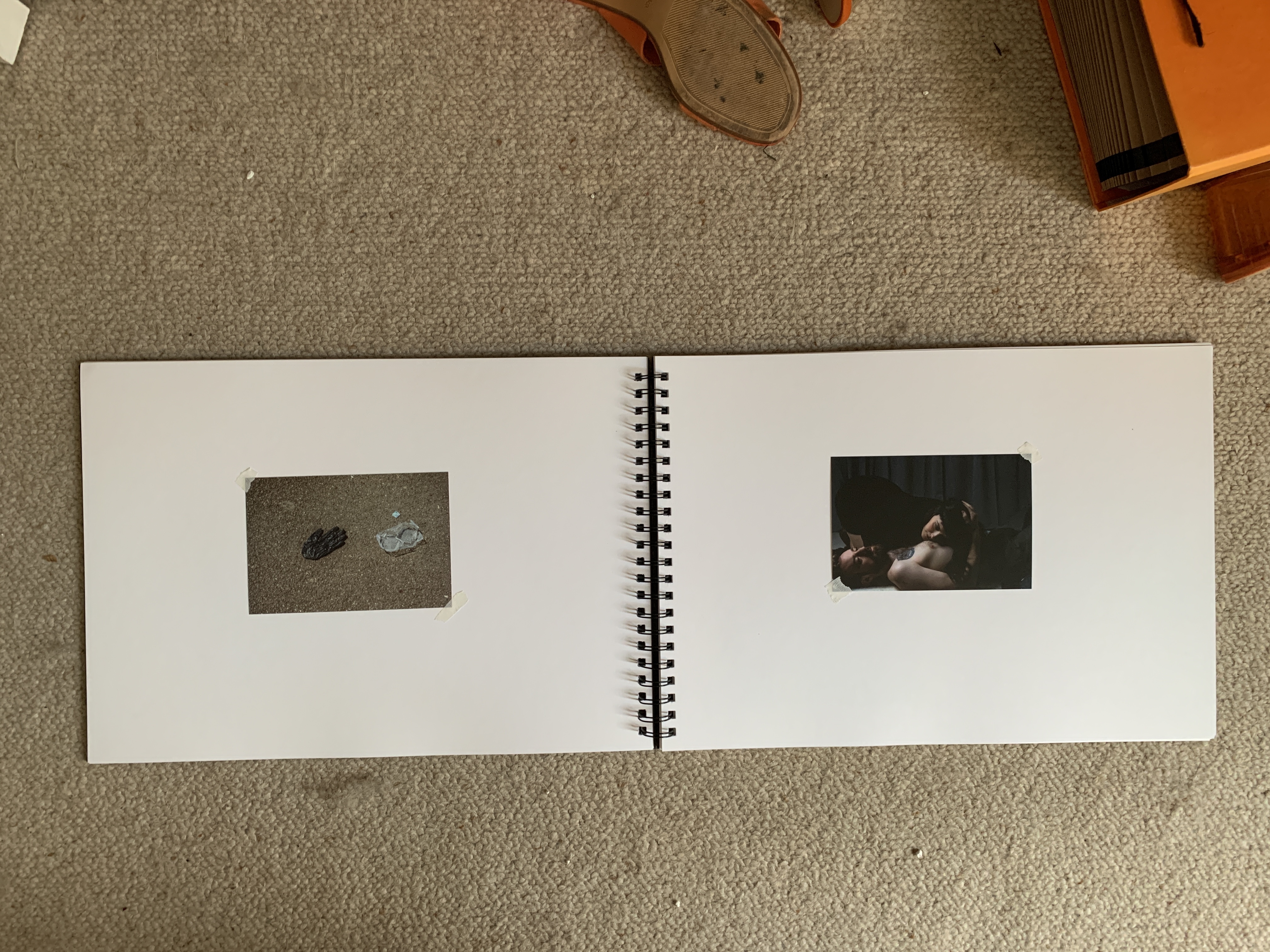
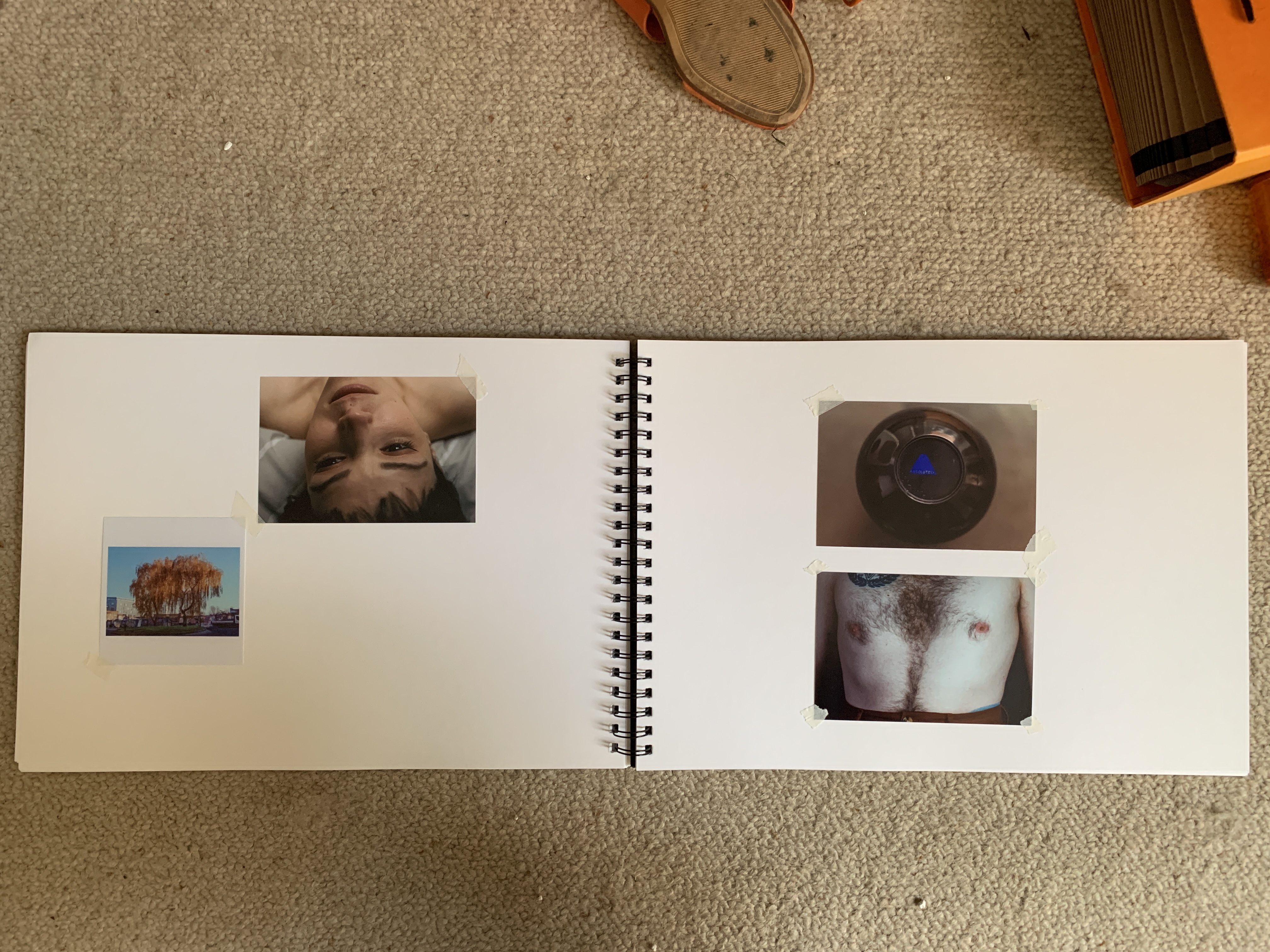
After the rigorous cutting and editing process, I have landed on 58 images across 22 spreads. I am happy with the structure and flow of the editing, the next area will be designing the layout of the book on Adobe Indesign.
Reference
Oliva Arthur in From the Archive: Making Photobooks in Magnum photobook: the Catalogue Raisonné
Chapter by Fred Ritchin; Carole Nagger Optional 2016
‘All of Me’ – An Interview with Elinor Carucci by Aaron Schuman December 2009This interview was originally published in Hotshoe International, Issue #163, Dec./Jan. 2010. Kiss, 1998, Closer, © Elinor Carucci via https://kategreen28.wordpress.com/2012/06/25/elinor-carucci-closer/ |
 CRJ
CRJ 