Following the completion of my first module (Positions in Practice) on the course, my photographic and artistic practice is taking a personal and conceptual trajectory. My photographic output has always been personal in relation to perspective, however I feel that the Positions in Practice module has given me more confidence to explore the personal connection between myself and the images and develop this further by creating an image from nothing as opposed to photographing what is around me.
Currently my practice is becoming increasingly focused towards photo-conceptualism whilst also exploring the concept of beauty, devotion and identity in my (and others) personal relationships. In doing this I have decided that I will start moving further towards staged sets and scenes (on a scale that is realistically achievable, hoping to create a visual analogy that represents the complexity of intimate relationships in current times.
Researching aesthetics, I came across Jon Berger’s analogy of the White Bird which presents the aesthetic experience as something relatable in an otherwise cruel and unforgiving word.
“It is within this bleak natural context that beauty is encountered, and the encounter is by its nature sudden and unpredictable. The gale blows itself out, the sea changes from the colour of grey shit to aquamarine. Under the fallen boulder of an avalanche a flower grows. Over the shanty town the moon rises. I offer dramatic examples so as to insist upon the bleakness of the context. Reflect upon more everyday examples. However it is encountered, beauty is always an exception, always in despite of. This is why it moves us.”
Berger, The White Bird (1985)
Berger’s realisation of beauty as a contextual anomaly makes me consider the subjective construct of what is beautiful, and why I might find an image that I consider to be more beautiful than another – where or why am I finding this aesthetic experience? The dualism put forward by Berger is something I aim to visually explore when constructing an image.
Looking inward (or more-so at the images I have taken that I have favored over others) whilst also looking at images that have struck me in the way that Barthes would describe as “the punctum” – being moved and rendered speechless by the photographic image, I am able to see that aspects of what I call beauty or aesthetically appealing are representations as well as fictional representations of reality.
The experience of looking at an image of something real is different from reality though the emotional effect is dependent on its relationship to reality. Looking at this in relation to Aristotle’s view on art as fiction or imitation in his work on Poetics (c. 335 BC) Aristotle maintains that the fictional status of art makes it possible to appreciate and enjoy things which are, in reality, unattractive or painful. This is particularly highlighted in his catharsis in relation to tragedy in art.
I would be be reticent to fully apply this to my own way of seeing because when I see a photograph of something tragic or perhaps emotionally challenging that moves me, I don’t feel that it is necessarily a positive experience – it is much more complex than that.
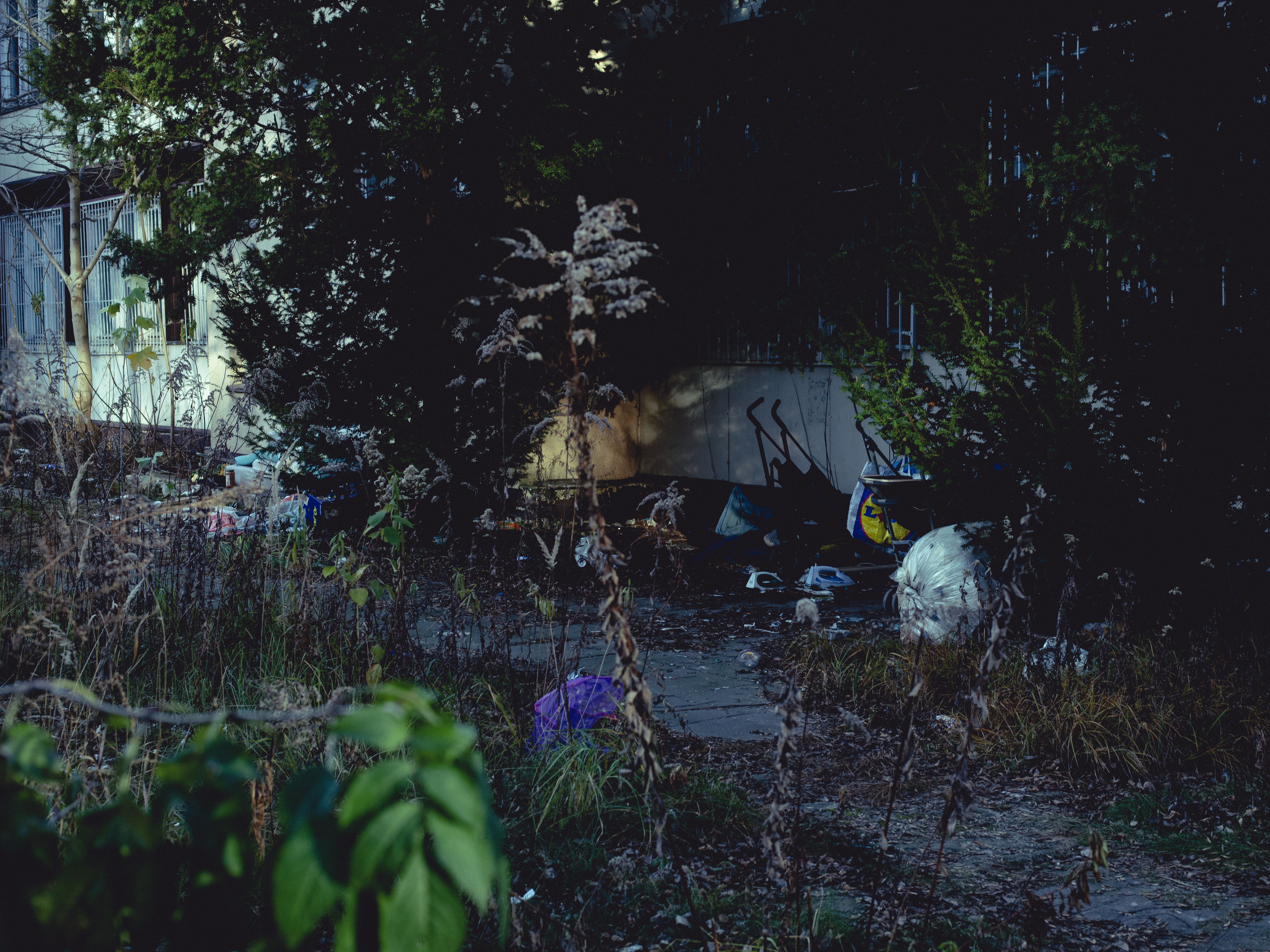
In my FMP I have been experimenting with text to work with the images in order to play with a narrative however this is something I looked into towards the end of the last module. Primarily inspired by Artists such as Ken Lum and Duane Michals I wanted to see what the impact would be to include text messages between myself and my partner on the images. I am currently not satisfied with the result visually but this is something to develop.
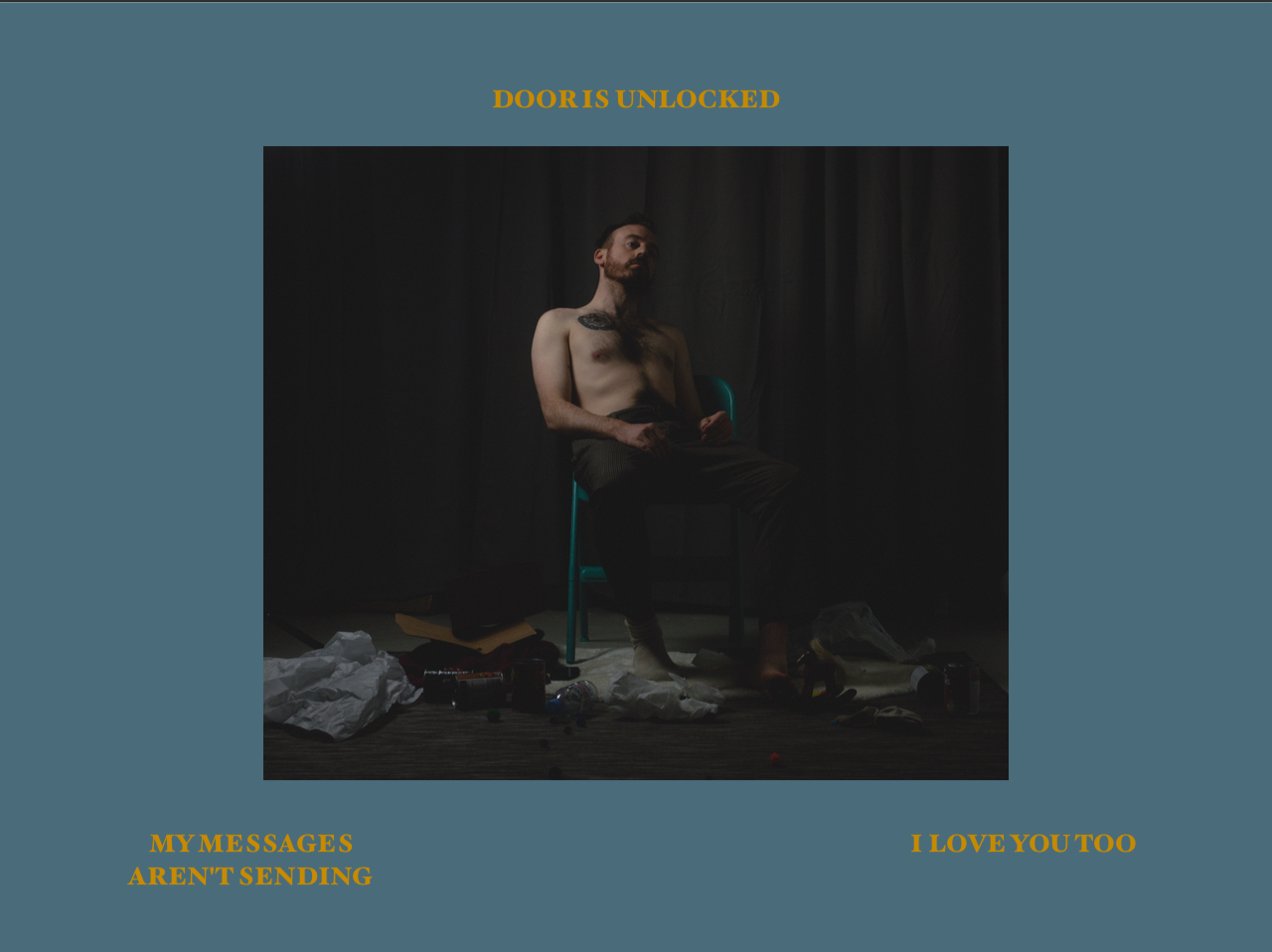
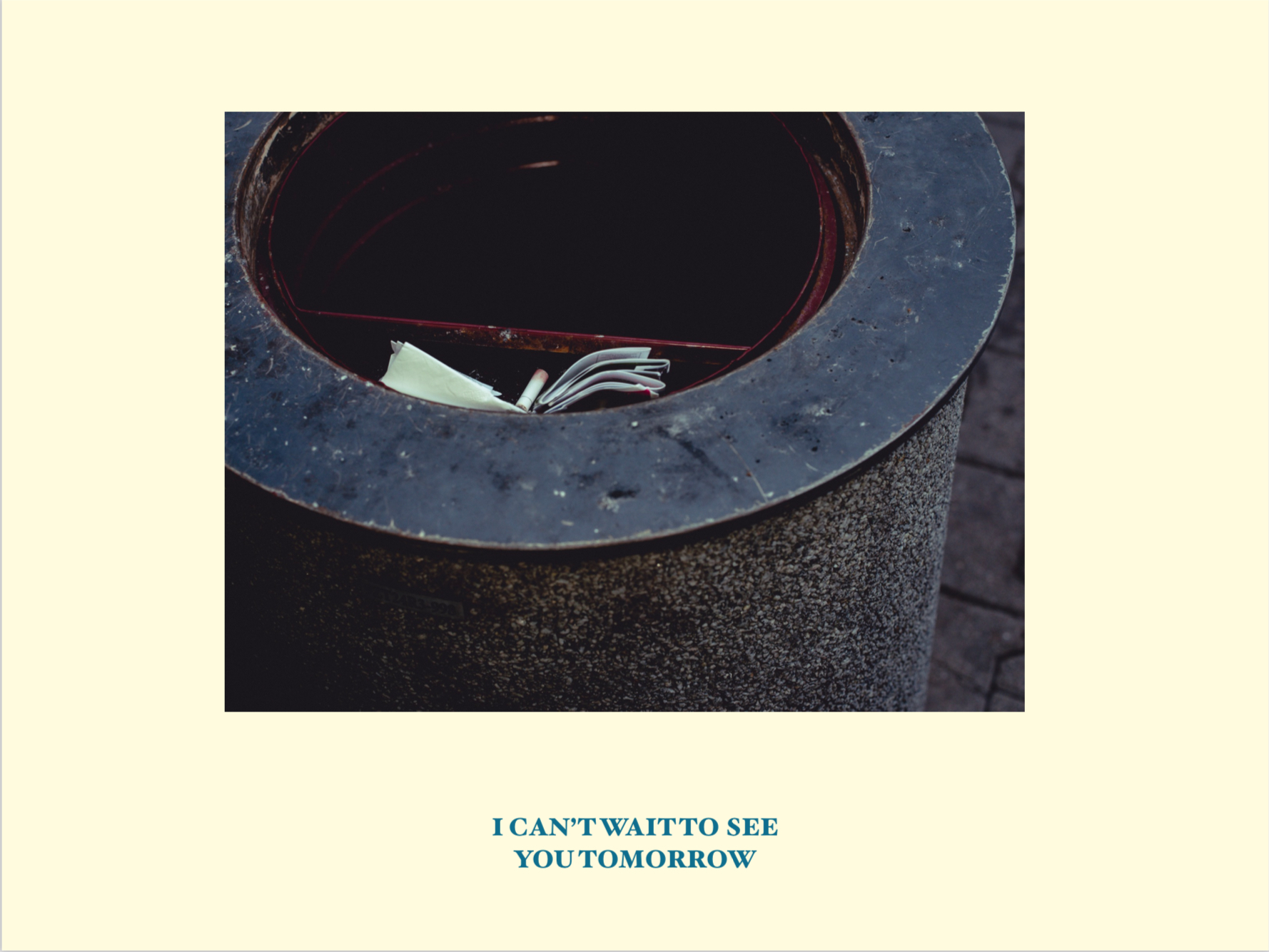
Human Choices
“Photographs bear witness to a human choice being exercised in a given situation. A photograph is a result of the photographer’s decision that it is worth recording that this particular event or this particular object has been seen.”
John Berger (1980: 292)
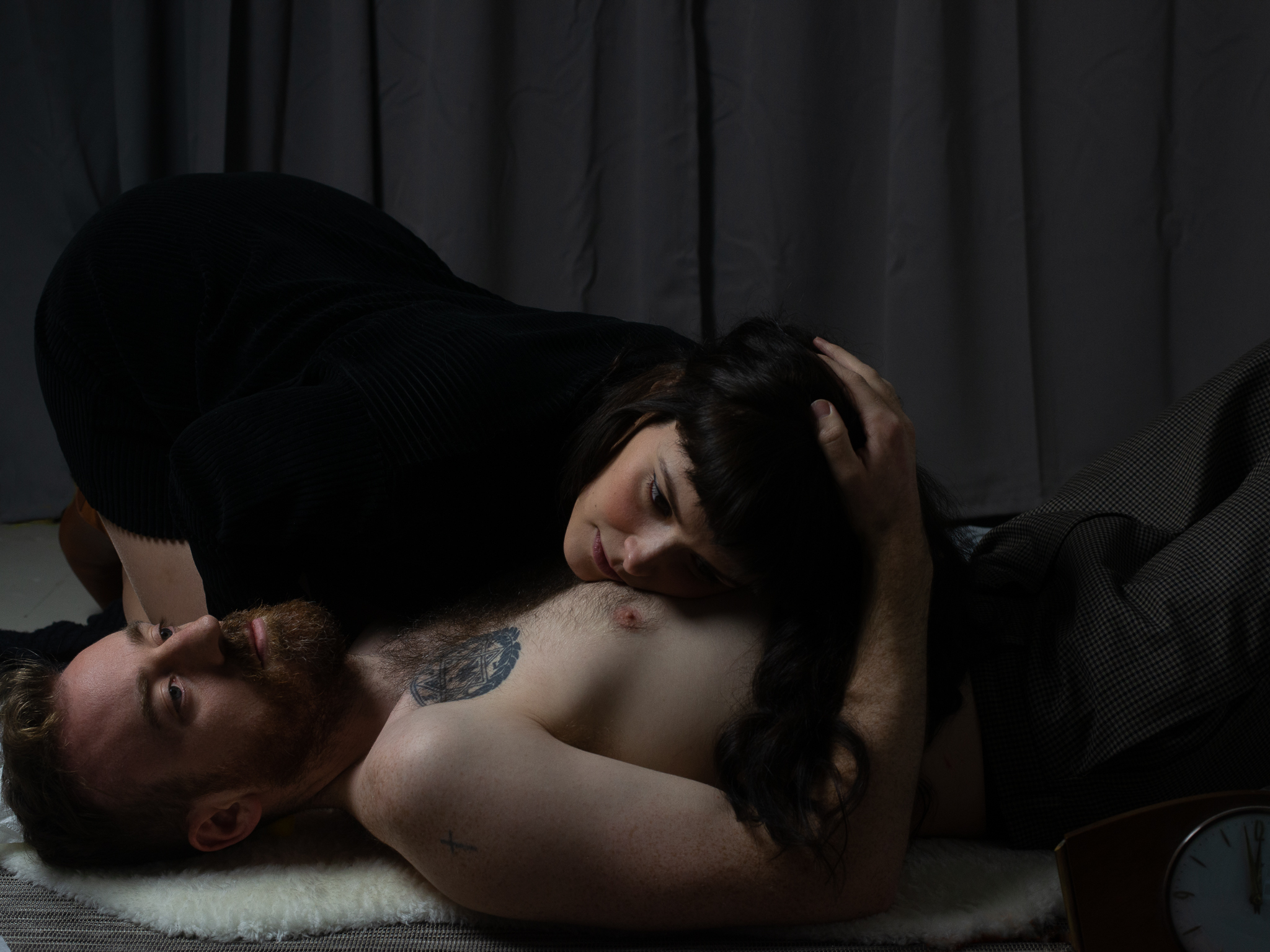
I think one of the most stand out choices for me currently and going forward is that the surroundings and potentially the subjects too are staged with the intent of conveying devotion, beauty as well as its antithesis in the difficulties that surround us in the everyday. The choices involved in this process are extensive, looking at set design, construction, objects in frame, location where required, colour palette, lighting – there is a lot to consider. Currently my FMP “Darling” is in the preliminary stages of development, . For my work in progress portfolio I used my small studio space to create portraits and self-portraits in a basic staged setting with objects that were available to me at the time.
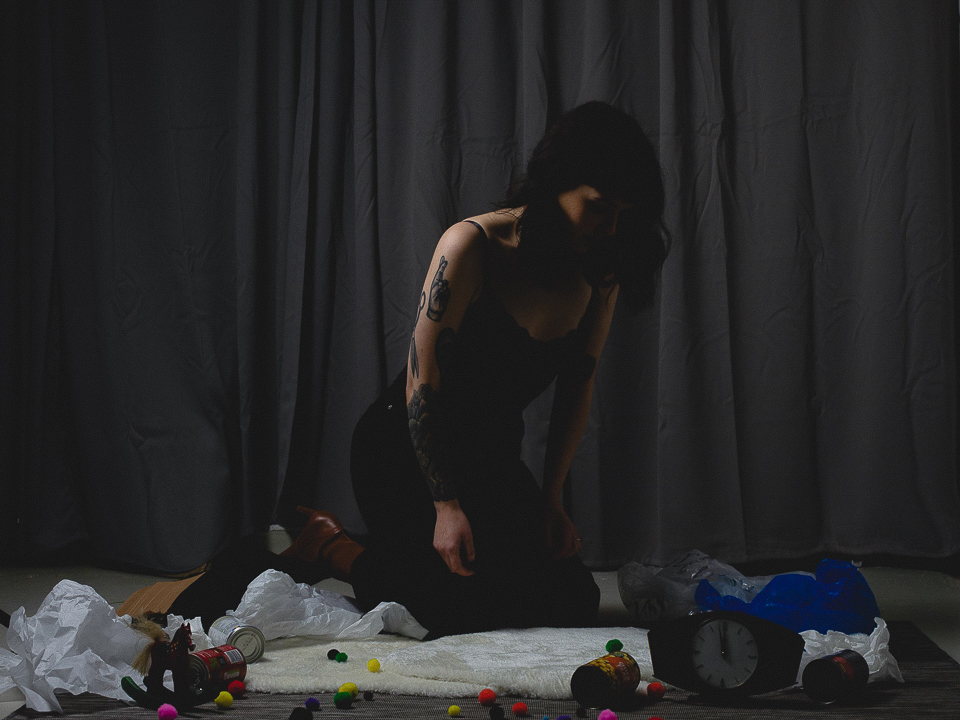
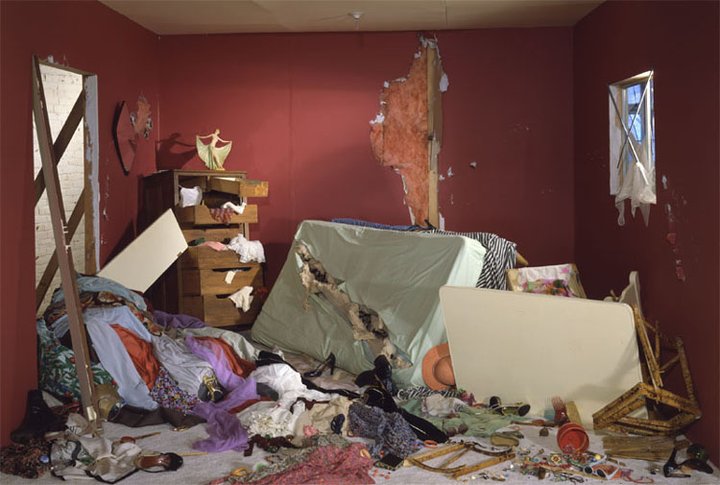
I think an area where this could be developed to produce a more coherent and complete result is in the background setting. Currently the images are set in the studio with a very loose and sparse environment. Comparing my images to an artist like Jeff Wall who regularly builds what he calls “replicas” of real-world environments as well as constructing his own environments based on his interpretation of art and literature for the subjects of his photographs to exist in, it is clear to see that the constructed element of the image is incredibly well thought out. So far I feel like I have only really managed to find a sense of atmosphere in the constructed work for my FMP so this is something to develop.
“Some of the places I have reconstructed are exact replicas of a place that has simply been unavailable to me practically… If i had been able to use the real place I would have. An accurate replica of a place – particularly when that place has been demolished becomes more like a document(…) a document that goes beyond the boundaries of a set”.
Jeff Wall Inerview: We are all Actors (2015)
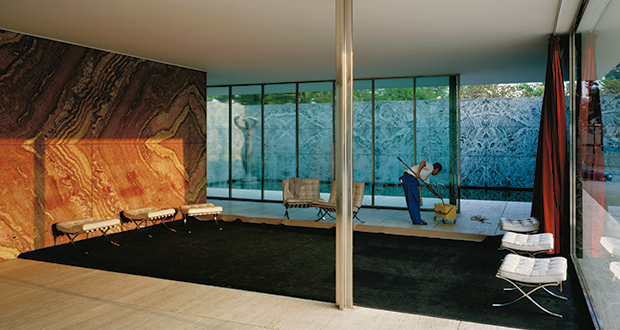
What I am able to take from this is; when thinking about creating a set that perhaps has been inspired by something I have already seen or something new, I could think about it as more than just a background.
When discussing his own work, it is interesting to hear his thoughts on what he considers beauty to be in an interview with Thierry de Duve.
“Beauty does not mean prettiness and beauty does not mean any one thing. it can be disturbing, it can be dissonant (…) but its a good term to use to suggest that there is something in the vanishing of the actual into the image which fascinates me at least and I see it as the aesthetic experience.”
Jeff Wall Inerview: We are all Actors (2015)
It is interesting to compare Wall’s description of beauty with Wolfgang Tillmans’ concept of what beauty is. Both conceptual artists, they seem to be coming at it from very different but equally accessible angles.
“One must pay close attention to the word ‘beauty’: when it is used in an absolute sense it becomes an excluding, restrictive concept. Beauty is what we think is acceptable in society; the search for beauty lies in moving its limits. Until recently it was acceptable to see two men killing each other, but not kissing one another, even on a visual, aesthetic level. I always try to question how we attribute meaning to what surrounds us. Beauty is part of this value system.”
Wolfgang Tillmans in Vogue Magazine (2018)
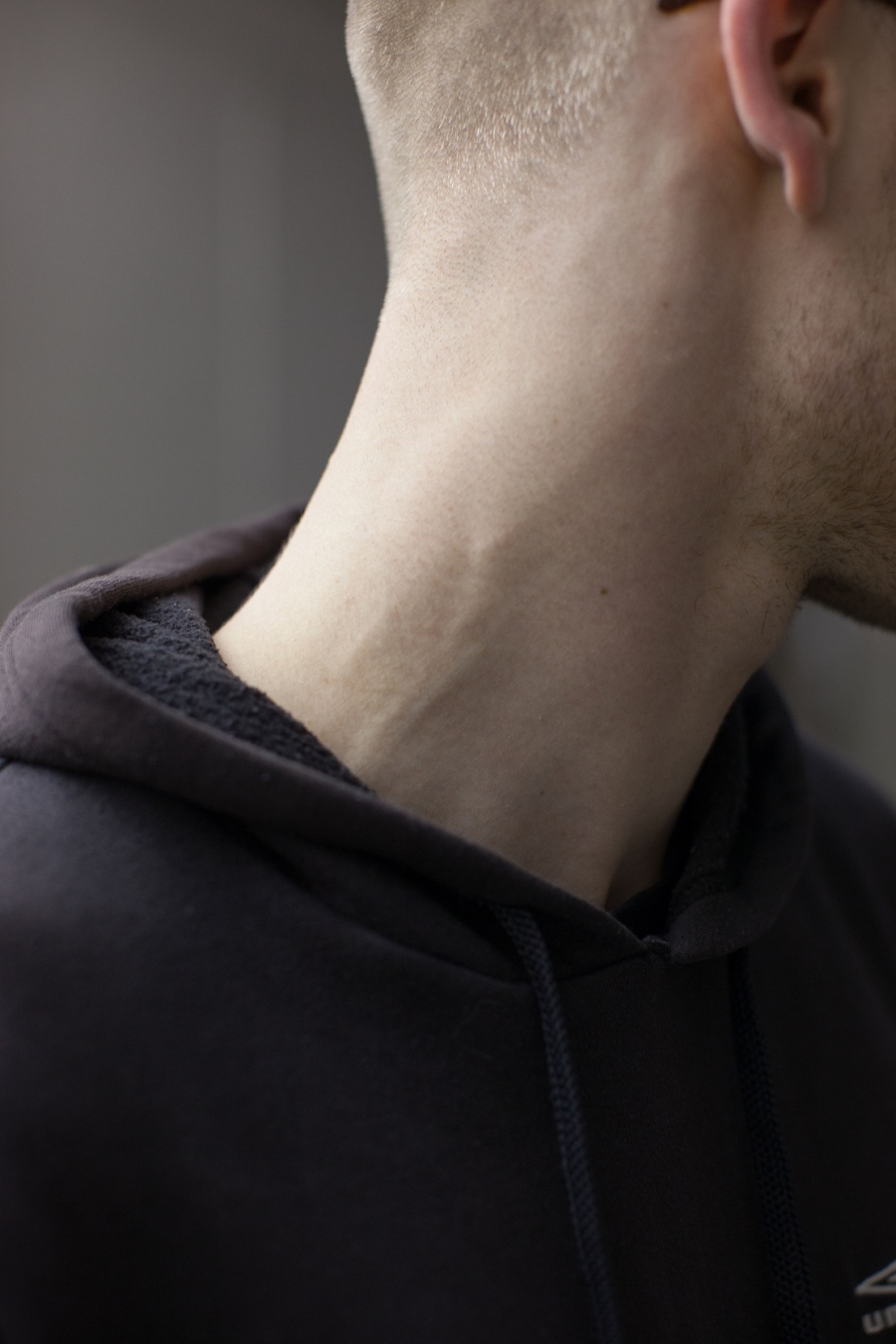
As a photographer I am consistently searching for beauty or aesthetic experiences in my work. Looking at the images I have produced so far, I am trying to avoid confusing beauty with the sensual – especially in the portraits. As an individual I think it is daunting to photograph something and call it beautiful or say that it has aesthetic value for the viewer because of how subjective these terms are. I feel that on one hand I have had some success in creating aesthetically appealing work but on the other hand it is only my opinion and it is certainly underdeveloped in terms of a final output.
Like Wall, Tillmans is a conceptual artist, and much of his work (especially portraiture) is collaborative like Wall’s and is considered staged. Where I feel that I identify with Tillmans work is in his depiction of objects that could just be everyday but take on a whole new depth when presented though his lens.

He is as far from Cartier-Bresson’s decisive moment as can be. He doesn’t go in for metaphor or simile; he doesn’t try to sum anything up, nail it down or catch it by the tail. He wonders at the beauty of a pear glowing in late afternoon sun as much as viscosity of the plastic bag from which it came. He homes in on the inner seams of discarded jeans. Even when photographing a momentous starry night he can’t help noticing the camera’s own distortions. Not every star in that sky is natural.
Laura Cumming reviewing Tillmans for The Guardian, (2017)
Wolfgang Tillmans was one of my earliest influences in fine art photography, seeing his work allowed me to photograph the things that I had always thought about photographing and present them to the public.
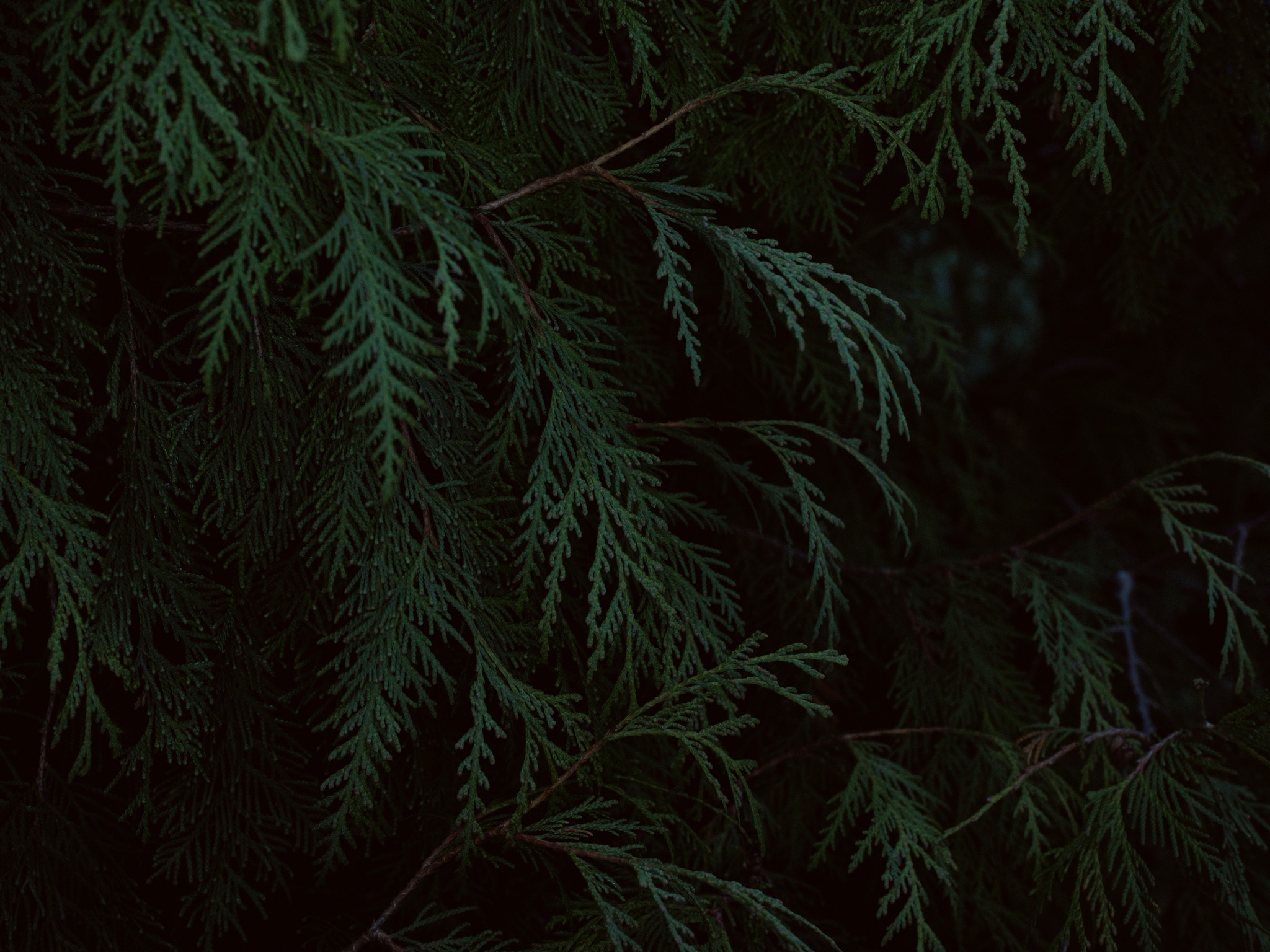
As part of my practice I choose to edit my images, tuning shadows, colour and adding grain for example. I have created a lot of my own settings for this purpose. The choice to do this is purely aesthetic, I do think that colour grading my images adds an extra feeling of nostalgia to the images. Alex Prager is well known for her use of colour in her work, in an interview in her book Silver Lake Drive she discusses the importance of colour and nostalgia to her work.
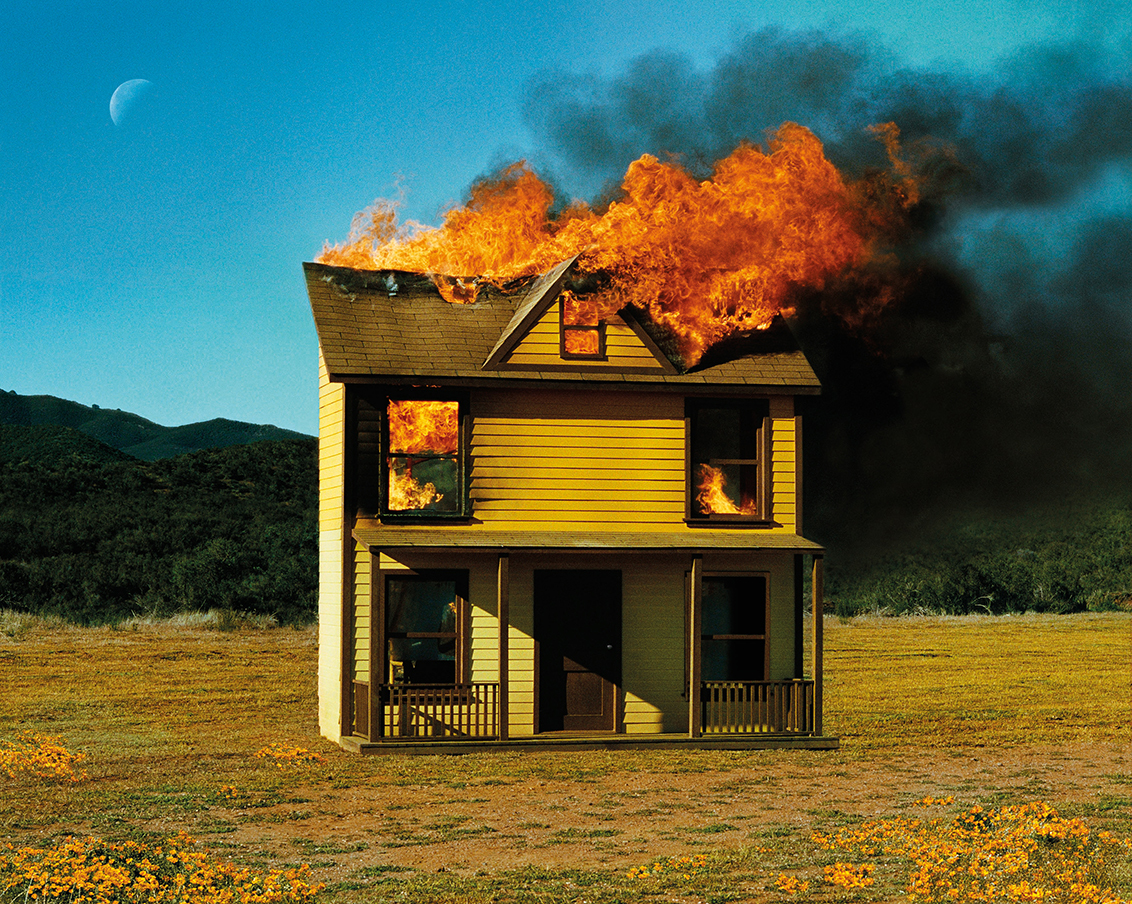
“In order to connect with the people, filmakers use tricks, lighting, makeup and music. I realised that there is some space between the reality I am trying to describe(…I mean, here, contemporary issues) and the nostialgia that provides familiarity and comfort for the viewer. this is my way to engage with an audience. If I just showed reality, then people wouldn’t be able to connect with it, because they get enough harsh reality every day. –
Alex Prager p79 -silver lake drive
I think where I have been successful is in the subtle edits, I think where I would need to spend more consideration is in the choice of colours used on set and in costume/props for example. Looking closely at Prager’s work you can also see scenes that almost look familiar regardless of the aesthetic shine given to her images. When seeing her retrospective at the Photographers Gallery in 2018 I was passing the photographs and seeing different famous films or advertisements in her work which adds another level of existential comfort. This was picked up in a review of Prager’s ‘Silver Lake Drive’ in Another Magazine.
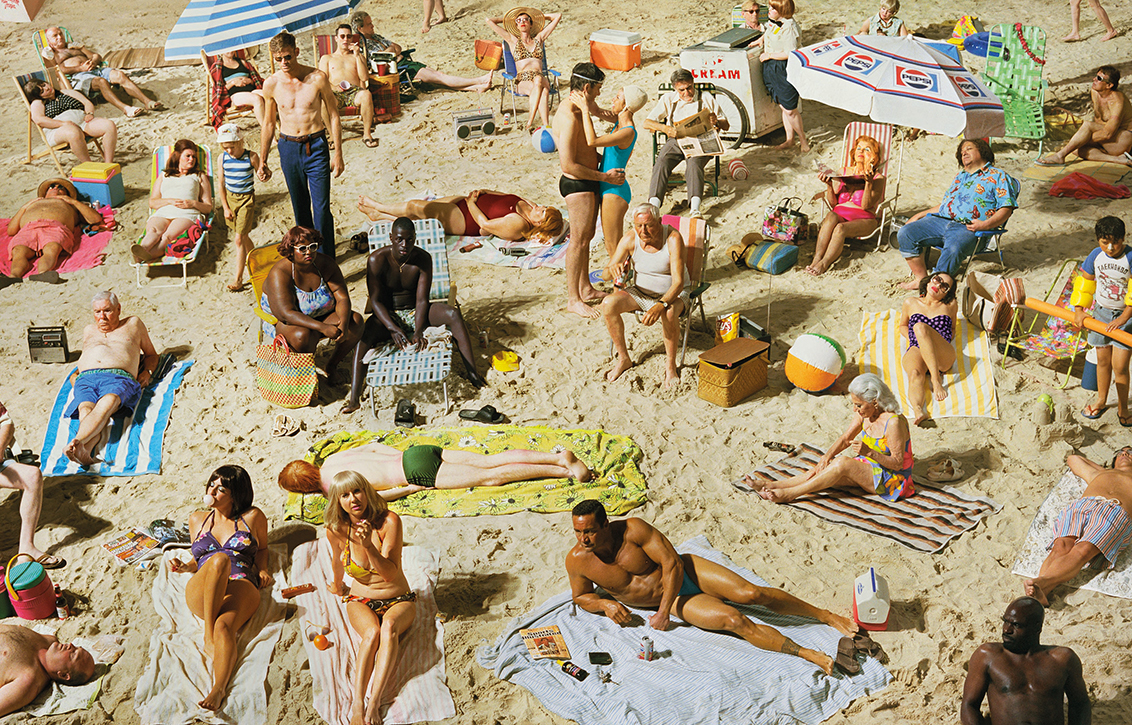
The work hinges on the smartly judged contrast between composed exterior and the inner existential anxiety that often underpins the human experience. Prager masks these dark emotions with a seductive retro aesthetic referencing post-war photography in tandem with the work of cinematic icons like Hitchcock and Lynch. Her aim is to traverse time, blending elements from the 40s up to the present day. “I love the idea that nostalgia makes us feel safe and comfortable because we have seen it before. I love the concept of familiarity because it gives us this false sense of security. The past always seems nicer than the present, but who fucking knows what it was like back then. We just don’t know, but that past give us that feeling and I love disorientating people.”
http://www.anothermag.com/art-photography/10921/exploring-hollywoods-sinister-underbelly-with-artist-alex-prager
This cinematic element to Prager’s work is not uncommon in tableau-vivant work and even photography as a whole, whether it is an artistic expression or something we now do just as the norm is not always clear. My choice to present cinematic lighting in my images is mostly down to aesthetic preference. I do feel that I need to work on bringing in more light to my images as they are quite dark at the moment. The darkness in my studio images was intended to have a sense of bleakness but I think the images would benefit from some additional lighting to highlight elements of the set or give more ambiance.
For further development on my final major project, I will be focusing a great deal on the image as a whole where as I have previously been unsure overall on what the image would say or provoke. I will research more about aesthetics and beauty as the dualism laid out by Berger and focus on how I can visually achieve that concept.
Sources
- Berger, The White Bird (1985)
- Aristotle Poetics
- Jeff Wall Inerview: We are all Actors https://www.youtube.com/watch?v=B8P9S6FeAuU&list=WL&index= 7 https://www.vogue.it/en/news/vogue-arts/2018/05/04/interview-with-wolfgang-tillmans/?refresh_ce=
- Laura Cumming reviewing Tillmans for The Guardian, (2017) https://www.theguardian.com/artanddesign/2017/feb/19/wolfgang-tillmans-2017-review-tate-modern-eduardo-paolozzi-whitechapel-gallery
- Alex Prager p79 -silver lake drive (2018)
- http://www.anothermag.com/art-photography/10921/exploring-hollywoods-sinister-underbelly-with-artist-alex-prager
Figures
- Figure 1. Oliver Grabowski (2018)
- Figure 2. Oliver Grabowski (2018)
- Figure 3. Oliver Grabowski (2018)
- Figure 4. Oliver Grabowski (2018)
- Figure 5. Morning Cleaning, Mies van der Rohe Foundation, Barcelona 1999 by Jeff Wall
- Figure 6. Jeff Wall The Destroyed Room 1978
- Figure 7. Wolfgang Tillmans Collum 2011 © Wolfgang Tillmans
- Figure 8. Wolfgang Tillmans astro crusto, (2012)
- Figure 9. Oliver Grabowski (2018)
- Figure 10. Oliver Grabowski (2018)
- Figure 11. Alex Prager: Compulsion (2012), 4:01 pm, Sun Valley, 2012
- Figure 12. Alex Prager: Face In The Crowd (2013), Crowd #3 (Pelican Beach), 2013
 CRJ
CRJ 