“The question is not what reality is, but what modes of representing it are available” Kholer
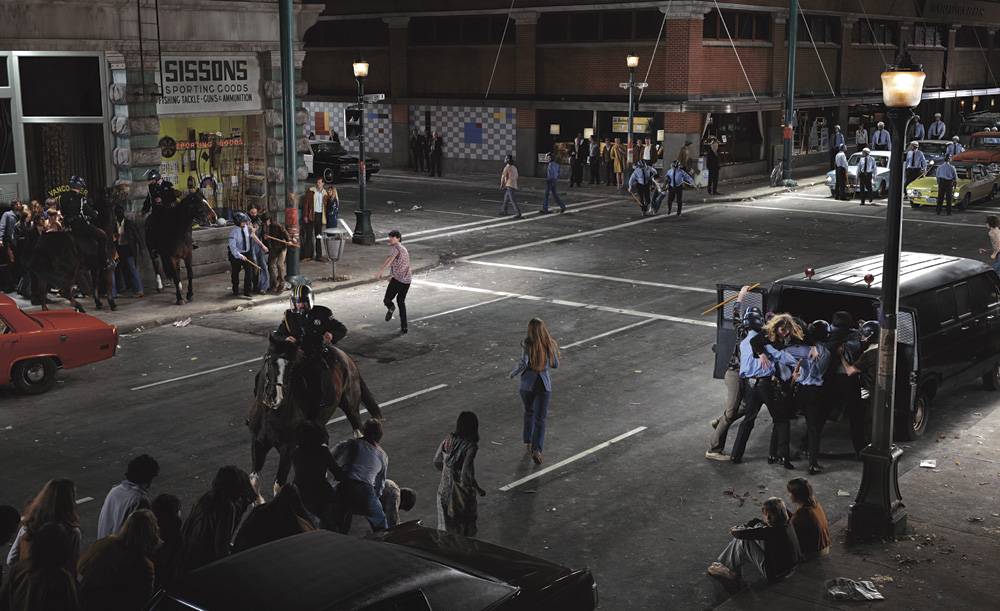
Stan Douglas ‘Abbott & Cordova, 7 August 1971’, 2009
Stan Douglas’s recreation of the Gastown Riots in Vancouver in the 70’s is interesting to me because it is a constructed scene however, the scale of the image as well as the genuine drama in the image makes it seem so authentic that it could easily be an incredibly accurate representation of the riots themselves. This image was constructed by Douglas as a director, the research for the image was taken from old newspaper archives, interviews and archival photographs so this is a construction based on previous constructions and subjective experiences.
The work looks a mix between hunter and farmer, the cinematic lighting and color in the image represent a cinematic aesthetic quality that showcases this image as being set in the past. The angle the image has been shot at is also a signifier that this has been staged in that it is the optimal viewpoint unlike you would expect from a traditional documentary photographer. The action in the image however is so well thought out that it looks natural that it seems to be capturing something real, this would be the optimal moment if there ever was one.Position your own practice in relation to this, both aesthetically and conceptually.
This is a very aspirational and inspirational piece of work for me as an artist. Whilst my practice isn’t completely different in terms of being a farmer in my approach to constructing my images, the more staged images I make look staged, as opposed to this photograph which is clearly staged but looks like a document of history.
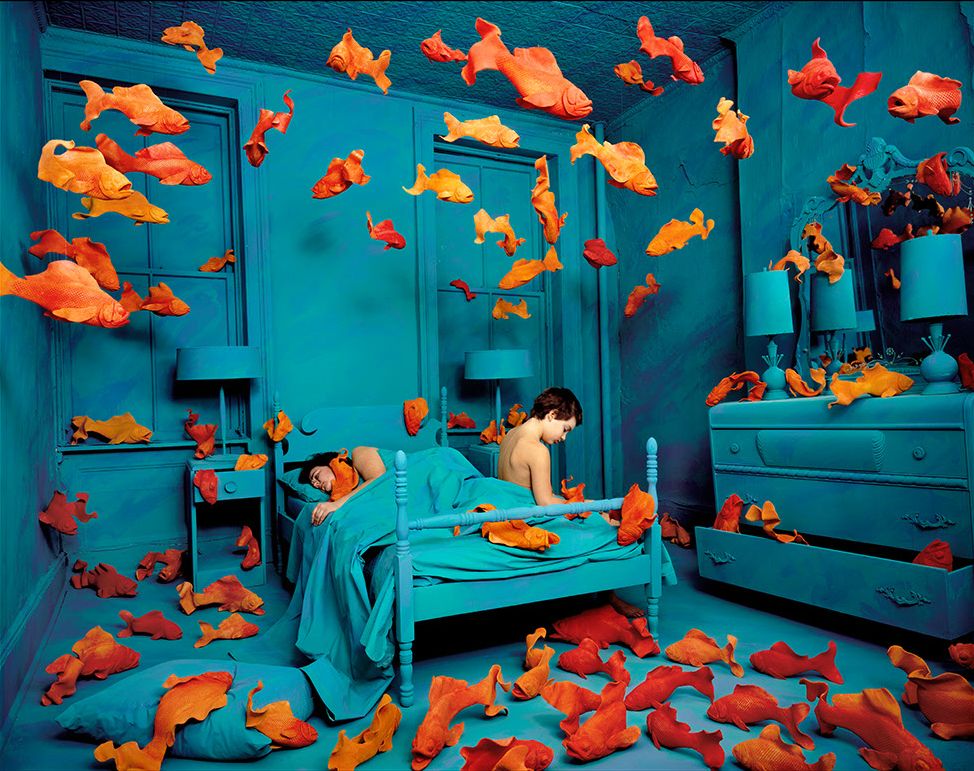
Sandy skoglund – Revenge of the Goldfish, 1981
Skoglund’s images are photographs of installations created by Skoglund, the photographs are important in the work as they are a permanent record of the temporary installations. The installations are interesting because when you look past the fishes and the colour, the scene is just an ordinary bedroom image. The shade of blue used in the photograph has multiple purposes, firstly being a representation of water and also night in the same way that darkness would cover everything in the room. The fishes, despite being harmless create a tension by surrounding the subjects in the photograph. All of these elements combined with the posing of the woman and the boy are farmed elements. Aesthetically Skoglund’s image is that of a farmer, everything has been cultivated and considered for the image.
Skoglund’s approach is familiar to my practice in that in my staged work, considering and weighing every element of the image to create the tension between the boy and woman. Conceptually I see my work as part performance and the studio space and other spaces I photograph in to be akin to installations however an installation can be anywhere.
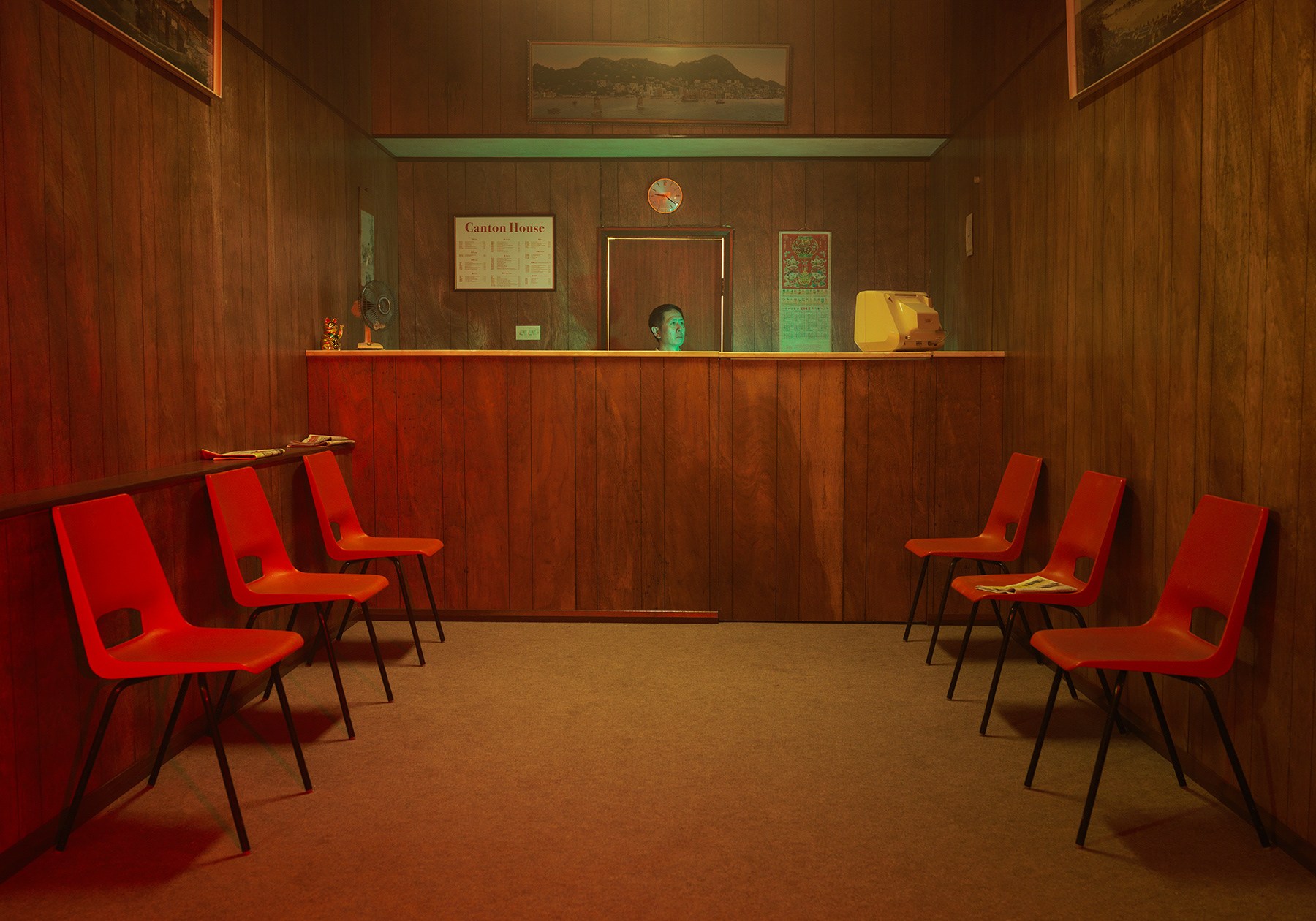
Nicky Hamilton, Take Me Away, 2018
Take Me Away is a series set in a replica of a Chinese Takeaway that was opened in the 1960’s and portrays Britain’s experience exploring culture, class and the act of waiting. What is interesting here is that the construct is an exact replica of the takeaway, helped by the owner of the takeaway who also features in some of the photographs behind the counter. The approach for constructing the images is a mixture of the subjective and objective in that Hamilton takes aspects of the real and romanticises them with cinematic lighting and objects from the past creating a nostalgia that is relatable to an audience.
 CRJ
CRJ 