Repeat Photography & Rephotography
Considering different approaches to practices regarding repeat and rephotography I find it interesting to look at Cindy Sherman. Look at what her repeat photography means. Whilst she is photographing herself she is not really photographing herself, but characters played by herself. The interesting point for me here is that whilst they are characters they are also definitely Sherman’s subversive response to social and cultural issues or climates.
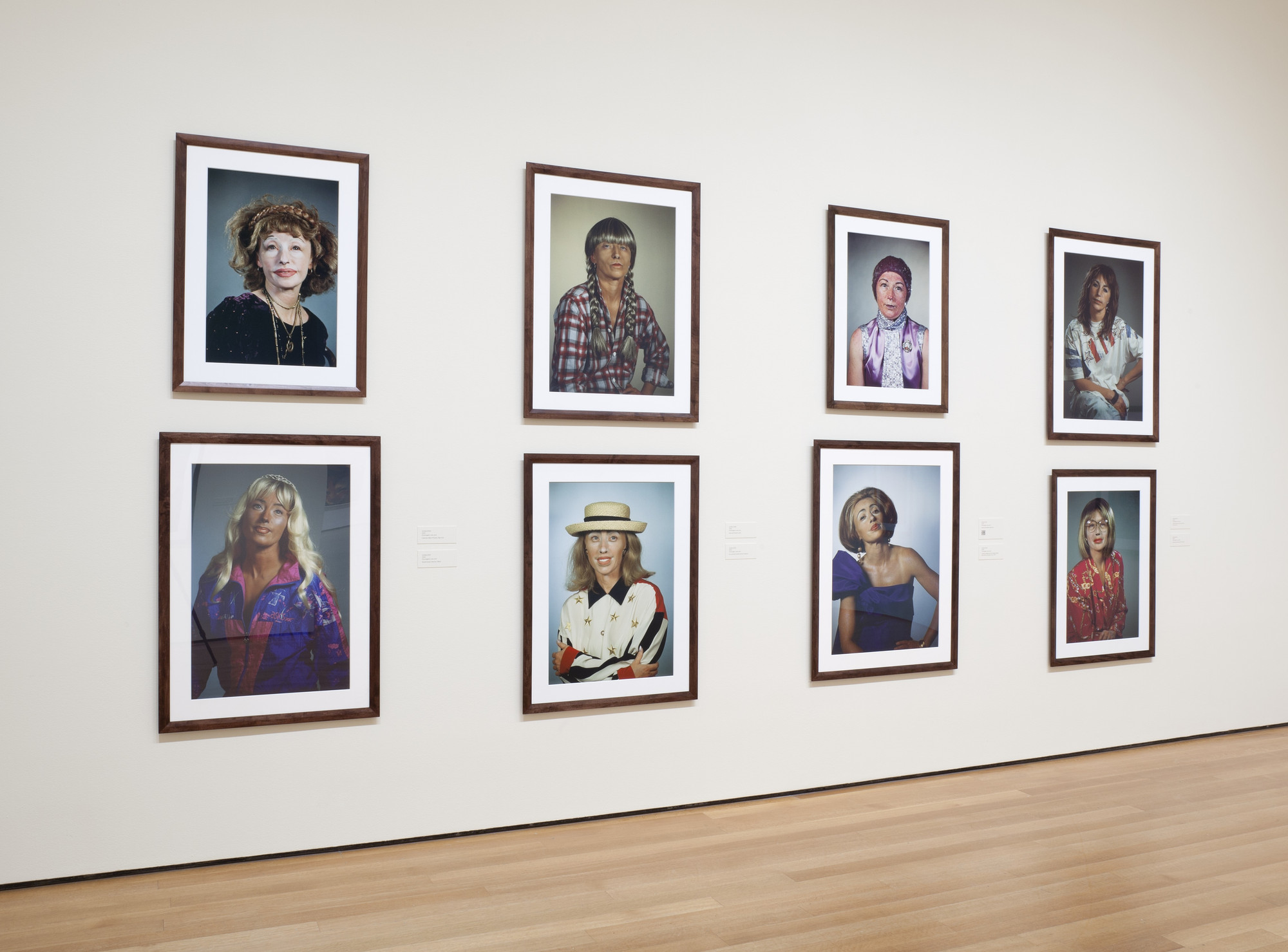
The versatility of her characters and her ability to stage herself anywhere in her images means that she can be anyone in any place until she either decides to stop or she runs out of ideas. There are different layers to Sherman’s rephotography, on one hand you have her ability to comment on gender roles in Film Stills and on the other hand you have a visual timeline of her getting older and what she has made throughout her life.
A more historical and physical incarnation of rephotography that I found on Lensculture is a project called ‘In Broken Sea’: Tbilisi-based photographer Nata Sopromadze was among them. In Broken Sea, an intimate collaboration with friend and colleague Irina Sadchikova, Nata revisited her memories of her homeland. Guided by Nata’s recollections, Irina visited Sukhumi, photographing her friend’s former house and local area. She then sent the undeveloped rolls of film back to Tbilisi, where Nata photographed her daily life and that of her children, creating an imprint of her present onto the past she had to leave behind. – https://www.lensculture.com/articles/irina-sadchikova-nata-sopromadze-broken-sea

The personal and intimate collaboration is perhaps slightly subversive to the term rephotography because the past is purely represented by the context of Nata’s personal relationship to the location as opposed to a physical representation. In practice, Irina’s guide is a location memory, which she then captures and gives to Nata. However Nata, isn’t able to see the image until she imprints her present life onto a representation of her past.
- Challenges met / overcome by other practitioners and any compromises they had to make.
Cindy – there must be a challenge in constantly putting on another face, it must be exhausting considering she does everything herself.
In Broken Sea – it is very much a conceptual pairing of past and present and the collaboration is restricted in that they aren’t able to see what they are doing together. It is not a case of matching up specific points.

My Practice
My current practice is centred around the relationship I have with my partner. In my project work I am trying to conceptualise the nuances of what we are together as well as apart through constructions as opposed to documentary images.
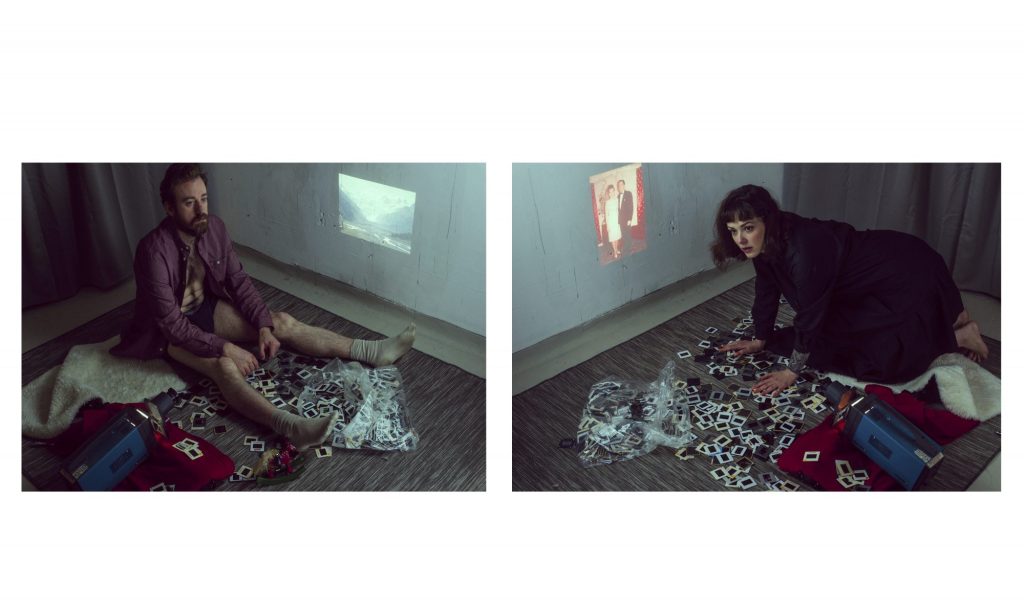
My methodology is based around a basic idea or visual cue that I write down (usually on my phone) and then develop over the space of weeks or even months. Then when it comes to creating the image in my studio or elsewhere, I spend time considering space, what instruments or tools I have to create the image and whether it is working. Really it ends up being off the cuff in a way and working within the limitations of space, money and equipment.
Looking at how rephotography could work in the context of my project, I am interested in photo collage, albeit in the sense of an emotional representation. The difficulty for me in doing this is making sure the images are relevant, I have previously worked with projections and diptych, as well as compositing but not with the aim of calling it rephotography.
References
https://www.lensculture.com/articles/irina-sadchikova-nata-sopromadze-broken-sea
 CRJ
CRJ 