Is an image ever really finished?
This week, we looked at the life span of an image or piece of work.
Mitchell, W. J. (1992) The Reconfigured Eye. (Cambridge, Mass: The MIT Press). The open end value of the digital image can result in fictions that yield new forms of understanding. – we must abandon the idea of an art world populated by stable, enduring and finished works and that we should look at replacing them with one that recognises a continual mutation.
I like to think that I wear my influences on my sleeve, I would be the first to say who I am influenced by, and what was fundamental in the aesthetic choices made in the imagery. My work is heavily influenced by cinema and the cinematic aesthetic. The image below is taken from my current WIP. I think that on some level this image has been influenced by the work of David Lynch. I didn’t approach the work with that in mind but over the course of time, the collections of what I visually enjoy have spilled out onto my work remediating what has come before me in a sense.
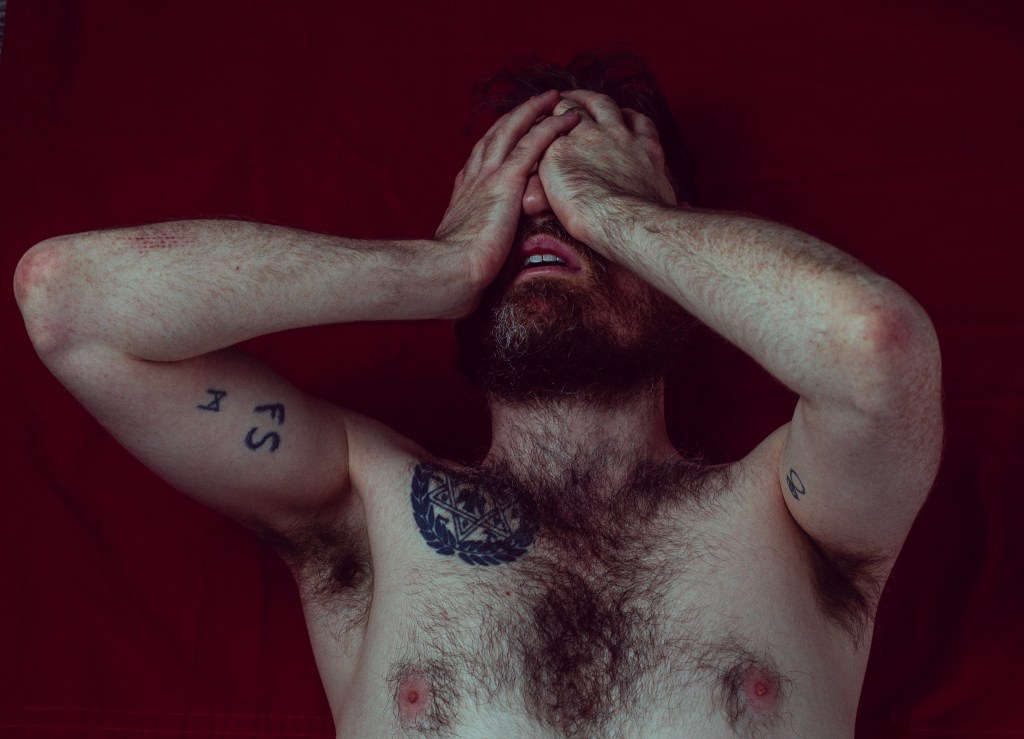
How transparent am I in my medium?
The images I have created thus far have been leaning towards remediation, however in the presentation of the work there have been elements of hypermediacy where i have paired images together to convey a singular overall feeling.
- remediation – two traits, immediacy where culture wants to make the the medium invisible, to remove all traces of it to create an immediate experience. Gregory Crewdson, advertising photography and VR
- Hypermediacy – pay more attention to the form of the work and its identification with other forms. David Hockney’s camera work – assemblage of images.
Joywar – On the rights of the Molotov Man


Joy Garnett is known for her paintings inspired by accessible digital images. Following an exhibition of her work in 2004, Garnett received a cease and desist letter citing infringement of copyright, from a lawyer representing Susan Meiselas. After a debate, which became known as ‘Joywar’, both put forward their perspectives in an article for Harpers Magazine titled ‘On the Rights of the Molotov Man’
I am conflicted, in a sense I might be angry if someone took my work and made it into something else because in my head, the image would have been finished, or I am done with the image. However, just because I am done with it does not mean that anyone else is.
In an exhibition I had in Toronto, I constructed a wall of images with the intent that anyone who came in could take what they wanted, I didn’t care what they did with the image because in putting them on the wall I was consciously throwing them away. Following the exhibition I saw Instagram stories of the images being included in other artist’s collage works and in other cases, just being hung on a wall on their own, continuing their life with someone else. The main factor here is, I know there would be no money involved in the process, the cost of printing the images was relatively small and the wall of images was built with the purpose of it being taken down brick by brick.
On the other hand, if I felt like someone was making a profit from my work and I felt taken advantage of then I know for a fact that I would want something in return, I am not a big enough person to just hand that over. The broader issue is that really, my photographic practice is digital anyway. It is data and pixels that only exists in the context of more data. Printing the images is really just transcribing the data into a visual format that is digestible, would it be just as acceptable to print the data itself?
Despite my apparent leaning towards the idea of acceptance in someone repurposing my work, I still feel personally attached to it, even if it really is just files of data I am unable to read.
I think my approach would be as follows:
Discovery of another artist or institution using my work
- Are they making money
- Is the context intact,
- If not, is it something I can accept?
- If I can’t accept it, will the art be seen by many?
- Is it worth contacting the artist or publisher and starting an argument, what do I seek to gain from something that might be completely irellevant
- If the artist is making money and it is heavily dependant on their repurposing of my image but with minimal effort or changing on their end then I will pursue legal action.
Is there even anything that is original now? My contribution to the sea of images is a personal one.I am presenting myself or at least something very personal in the images, however that is contextually dependent on the audience’s understanding. I do want to strive towards a level of creativity that doesn’t directly copy someone else’s work in a literal sense, conceptually remediating or appropriating existing work however is a grey area for me. To give an existing work a new concept could mean putting the work in an entirely different place in terms of audience or understanding. This feels new to me.
The problem is intellectual property, In the example of Richard Prince and the Marlborough man or his Instagram work, he thinks he created something new. Conceptually I would agree that he has whilst taking advantage and opening dialog on ownership rights on social media.
:format(webp):no_upscale()/cdn.vox-cdn.com/uploads/chorus_asset/file/3740804/prince1.0.png)
His idea to print them out other user’s selfies put them in a gallery is a new idea. The selfies would never have existed outside of Instagram otherwise. There was never intent for a gallery/institution to display the original content from the users.
In the case of the Marlborough man however, I feel for the original creator in the sense that there was a concept that was realised for a purpose and whilst it may have felt finished, Prince has reopened it and gained a lot more from it than the original creator could have hoped for.
In this instance Richard Prince wanted to photograph images that had already been photographed, however instead of recognizing the work that he appropriated, there was no reference to the original images. “I was trying to make the photograph as much mine as possible” Prince – 2006 “ I would just turn the focus to get some of the moire so that there was no reference that it came from a magazine page. I would do that deliberately.”

In the case of the Molotov man, it is slightly different for me, because the context of the original image is more than just an iconic image for a tobacco company. It is a cultural representation of something that is important to many people and to re-purpose it seems careless. In the same way that the Che Guevara image was removed from cultural context for Cuba and plastered all over t-shirts and misinterpreted by millions of people across the west who were not in anyway affected or informed by the political and social shadow cast over Cuba .
How can appropriation be of use to us?
It is impossible for me to entertain the idea that anything is truly original or has been for a long time. That isn’t a bad thing, just because something is inspired by something else doesn’t make it inadequate or less important. If anything the remediation and appropriation of inspirational content, work or material is akin to refinement.
I know that my own work is most definitely not original in form. Firstly they are photographs, they are portraits, there is nothing objectively new and exciting about them because they are inspired by other artists such as Gregory Crewdson, Juno Calypso, or Alex Prager to name a few.
Remix?
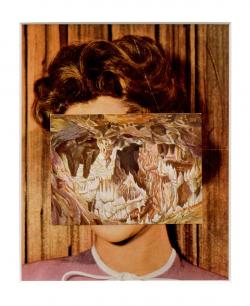
Mask XXIX (2006)
Do you think remixing is merely a means to complete a project or is a form of remixing operating at a deeper level of your practice?
I don’t think that remixing necessarily means completing a project. If anything it would more likely be a further development of a project. The project will have multiple lifespans to different participants, whether that is the original source, the remixer or the audience, it could be re-remixed or reproduced and take on a new context in a new space. I think where remixing would come into play in my practice is the conscious and unconscious remixing of my influencers.
When considering remixing in my practice in correlation to my FMP, I could surmise that in essence I am remixing myself to appear in the work, the remixing being used to visually reveal something very personal about my life but in a way that is indirect.
In the way that Cindy Sherman utilises pastiche and stereotypes to create her personas in her work, I am using my influences to shape the way I express my persona and shape my ego in the images.
Would you agree that you are remixing images and ideas that you have previously encountered but can’t remember?
For lack of a better word, remixing is the recombination of original material, differing from appropriation in the sense that every combination is an explicit modification.
It is also synonymous with participatory culture, which Henry Jenkins described as, “A culture with relatively low barriers to artistic expression and civic engagement.”
According to Gombrich, the realist artist can only represent nature by relying on already established “representational schemes”; the history of illusion in art involves slow and subtle modifications of these schemes over many generations of artists.
E.H Gombrich, Art and Illusion; Roland Barthes, “The Death of the Author,” in Image/Music/Text
I personally don’t feel like I would get much from remixing my images, however there is definitely a case for trying. I do find the John Stezaker remixes to be visually captivating, and it could be an alternative approach for me to explore with another artist or even myself. This would take a bit of a veer away from the immediacy in the terms of the remediation in my work. So far the portraits and images, even the diptychs have been straight forward images that don’t encourage the viewer to think about anything but the content of the image.
 CRJ
CRJ 